Cricket Captaincy Under Pressure: The Psychology Behind Critical Decisions


Cricket captaincy becomes most challenging when a match reaches a decisive moment. A bowling change, field adjustment, batting order decision, or strategic timeout can influence the direction of a contest. Yet captains must make these choices while facing uncertainty, limited information, player expectations, and intense public scrutiny.
Cricket Captaincy Under Pressure is therefore not simply about tactical knowledge; it also involves emotional control, leadership, situational awareness, and the ability to think clearly when mistakes become costly. Understanding the psychology behind these decisions reveals why some captains remain composed during difficult situations while others struggle to adapt.
Understanding the Psychology of Cricket Captaincy
A cricket captain operates as both a tactical leader and a psychological influence within the team. Unlike many team sports, cricket gives captains substantial responsibility for on-field decisions, including bowling changes, field placements, and strategic adjustments.
Research on athlete leadership identifies several important leadership functions, including communication, motivation, relationship management, and decision-making. Cricket captaincy combines these responsibilities with the pressure of personal performance.
A captain must simultaneously consider:
The match situation and available tactical options.
Individual player confidence and emotional condition.
Opposition strengths and weaknesses.
Team communication and coordination.
The possible consequences of every decision.
This combination makes captaincy a demanding leadership role rather than simply an administrative responsibility.
Why Pressure Changes a Captain's Decision-Making
Pressure can affect a cricket captain's concentration, confidence, and tactical judgment. During critical match situations, captains must process information quickly, manage emotions, and make decisions while facing uncertainty and intense expectations.
1. Fear of Failure and Public Scrutiny
Captains frequently make decisions that become immediately visible to spectators, commentators, and analysts. A defensive field, an unexpected bowling change, or an unsuccessful tactical gamble can quickly attract criticism.
This scrutiny may create hesitation. Instead of selecting the most suitable option, a captain might become overly concerned about avoiding blame.
Effective leadership requires accepting that uncertainty is unavoidable. A sound decision can produce an unfavorable outcome, while an incorrect decision may occasionally succeed because of unexpected circumstances.
The quality of a decision should be evaluated through its reasoning and context, not solely through the final result.
2. Emotional Control During Difficult Moments
A sudden batting collapse, expensive bowling spell, or missed fielding opportunity can change the emotional atmosphere of a team.
When frustration influences leadership, communication may become less effective. Players can become hesitant, defensive, or disconnected from the captain's instructions.
Emotional control allows a captain to separate immediate disappointment from the next tactical requirement.
3. Information Overload
Modern cricket involves extensive tactical information, including pitch conditions, player matchups, opposition tendencies, and analytical recommendations.
However, more information does not automatically produce better decisions.
Captains must identify which information matters most in the current situation. Prioritizing relevant signals over unnecessary details helps maintain clarity and responsiveness.
The Tactical Decisions That Define Cricket Captaincy
Cricket captaincy involves tactical choices that directly influence match strategy and team execution. Bowling changes, field placements, and batting decisions require situational awareness, opposition analysis, and confidence in players. These decisions become particularly important during high-pressure moments.
Bowling Changes and Match Awareness
Bowling changes represent one of the most visible examples of captaincy psychology.
A captain must consider the bowler's confidence, physical readiness, opposition batter, field conditions, and remaining overs. The decision also requires balancing immediate opportunities against future requirements.
For example, introducing a specialist bowler against a particular batter may appear tactically attractive. However, the captain must also consider whether that bowler will remain available for a potentially more important phase.
The strongest decisions combine tactical preparation with flexibility.
Field Placements and Opposition Reading
Field settings communicate a captain's understanding of the opposition and the match situation.
An attacking field may create opportunities for wickets, while a defensive arrangement can reduce scoring options. Neither approach is universally correct.
A captain should understand what the field is designed to achieve and communicate that purpose clearly to the players.
Batting Strategy and Confidence
Batting decisions also involve psychological considerations.
A struggling batter may benefit from a simpler scoring approach, while an experienced player might require greater freedom to respond to changing conditions.
Captaincy psychology in cricket involves understanding individual personalities without compromising the overall team strategy.
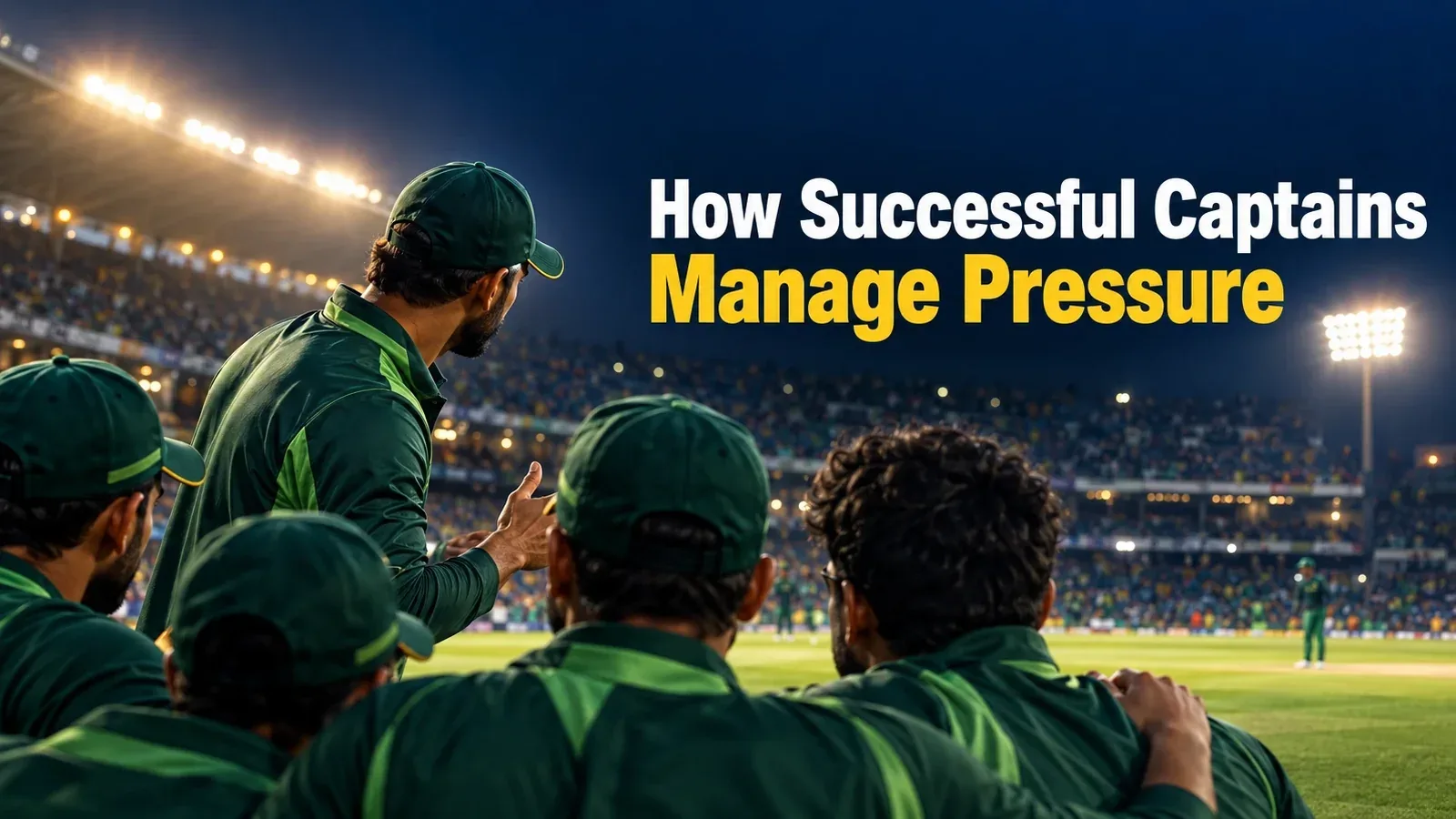
How Successful Captains Manage Pressure
Successful captains manage pressure through preparation, emotional control, clear communication, and tactical flexibility. Their ability to remain composed, trust their players, and respond effectively to changing match situations helps maintain team confidence and decision-making quality.
1. Build a Clear Pre-Match Plan
Strong tactical leadership begins before the first ball.
Captains can prepare alternative strategies for different match situations, including unexpected batting combinations, changes in pitch behavior, and opposition scoring patterns.
Preparation reduces the number of decisions that must be made from scratch during stressful moments.
2. Focus on Controllable Factors
A captain cannot control every outcome. Weather, individual mistakes, unpredictable conditions, and opposition execution remain uncertain.
However, captains can control communication, preparation, field organization, tactical adjustments, and team effort.
Concentrating on controllable factors prevents unnecessary emotional reactions.
3. Communicate With Confidence
Players need clarity when the match becomes difficult.
A captain who communicates calmly and directly can help teammates understand their responsibilities. Effective communication also encourages players to share observations that may improve tactical decisions.
Leadership is not about speaking constantly. It is about providing the right information at the right time.
4. Learn From Decisions Without Losing Confidence
Every captain experiences tactical mistakes.
The important distinction is between learning from an error and allowing it to influence subsequent decisions negatively.
Reviewing decisions after matches can reveal patterns, improve tactical understanding, and strengthen future preparation.
Examples of Captaincy Psychology in Cricket
MS Dhoni: Composure and Tactical Patience
MS Dhoni is frequently associated with composure and tactical patience. His leadership reputation illustrates the value of remaining calm, communicating clearly, and allowing players to execute their responsibilities.
His captaincy provides an interesting example of how emotional steadiness can influence the team's response to pressure.
Virat Kohli: Energy and Competitive Intensity
Virat Kohli represents a contrasting leadership style characterized by visible competitive energy and intensity.
His approach demonstrates how emotional expression can contribute to motivation and team engagement when directed constructively.
These examples highlight an important principle: effective captaincy does not require one universal personality. Different leadership styles can work when they support communication, tactical clarity, and team confidence.
Practical Framework for Evaluating Captaincy Decisions
Cricket analysts and fans can evaluate captaincy more thoughtfully by following a structured approach.
STEP 1
Identify the match situation
Determine the score, overs remaining, wickets available, and immediate tactical challenge.
STEP 2
Understand the available options
Identify realistic bowling changes, field adjustments, or batting strategies.
STEP 3
Evaluate the decision
Examine whether the captain considered player strengths, opposition tendencies, and match conditions.
STEP 4
Separate decision quality from outcome
Analyze whether the choice was reasonable when it was made, even if the result was unfavorable.
STEP 5
Assess communication and adaptability
Determine whether the captain adjusted effectively and maintained team coordination.
This framework can make cricket analysis more meaningful than simply labeling a captain's decision successful or unsuccessful.
The Role of Team Chemistry in Captaincy
Captaincy is not an individual activity. Its effectiveness depends on the relationship between the captain, coaching staff, senior players, and younger members of the team.
A captain who understands teammates' strengths and communication preferences may be better positioned to manage difficult situations.
Senior players can also provide alternative perspectives during critical moments. This creates a form of shared leadership in which tactical responsibility remains clear while valuable experience is distributed across the team.
Conclusion
Cricket captaincy under pressure is a combination of tactical intelligence, psychological resilience, and leadership discipline. The most effective captains understand that critical decisions involve uncertainty and that successful leadership requires more than simply choosing an aggressive or defensive approach.
Composure, preparation, communication, and adaptability help captains manage challenging situations while maintaining team confidence. Their decisions should be evaluated through context, reasoning, and execution rather than outcomes alone.
For cricket enthusiasts, understanding the psychology behind captaincy offers a deeper perspective on the game. It transforms match observation into meaningful tactical analysis and reveals how leadership influences cricket beyond individual performances.
Frequently asked questions
What makes cricket captaincy psychologically demanding?
Captains must combine personal performance with tactical leadership, communication, team management, and public accountability. These responsibilities create considerable psychological pressure.
How does pressure affect cricket captain decision making?
Pressure can influence attention, confidence, and emotional control. Captains may become hesitant or overly defensive when they focus excessively on criticism rather than the match situation.
Can an aggressive captain be successful?
Yes. Aggressive leadership can create energy, confidence, and competitive intensity. Its effectiveness depends on whether that intensity supports constructive communication and disciplined decision-making.