India vs New Zealand 2nd ODI Match Analysis: How Pace, Bounce, and Rain Decided the Wellington Thriller


The second ODI between India and New Zealand in Wellington was not a game for the faint-hearted. In an era where 300+ totals are becoming the norm, this low-scoring, rain-curtailed thriller served as a beautiful reminder of how captivating traditional ODI cricket can be.
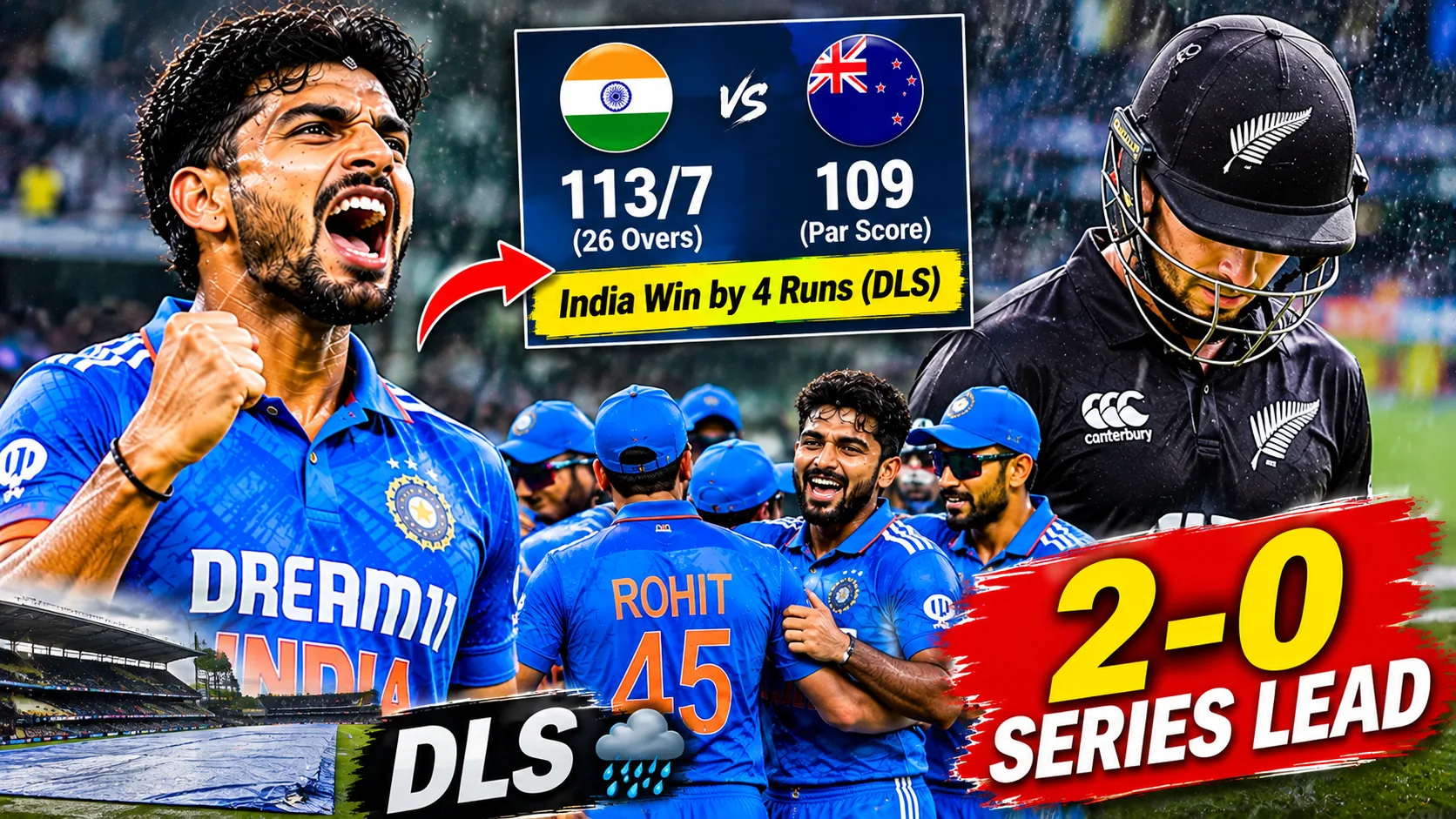
Team India ultimately secured a nerve-wracking 4-run victory via the DLS method, taking an unassailable 2-0 lead in the series. But a deeper look at the match reveals a rollercoaster of tactical brilliance, top-order vulnerability, and weather-dictated drama.
Here is our comprehensive, tactical match analysis of the IND vs NZ 2nd ODI.
1. Tactical Masterstroke: The Toss and Pitch Conditions
The game was heavily influenced before a single ball was even bowled. Wellington woke up to heavy, overcast skies, creating a humid environment tailor-made for swing bowling. Indian skipper Shubman Gill won the toss and made the absolute correct call to field first.
The pitch had a tinge of green and offered a "tennis-ball" bounce. The Indian pacers knew that pitching the ball up for conventional swing wasn't enough; they had to hit the deck hard to exploit the unpredictable bounce.
2. The Bowling Blueprint: Gurnoor Brar’s Lethal Execution
The standout story of the first innings was young Indian pacer Gurnoor Brar (4/30). From an analytical standpoint, Brar didn't just bowl fast; he bowled smart.
Exploiting the Kiwi Middle Order
Brar realized early that the New Zealand batters were struggling with deliveries that angled in and reared up awkwardly. His double-wicket maiden over—where he dismissed Tom Latham and Glenn Phillips—was a masterclass in aggressive, short-pitched fast bowling. He forced the batters to play off the back foot, creating indecision that directly led to catches in the infield.
Daryl Mitchell’s Tactical Patience
While his teammates crumbled, Daryl Mitchell (55 off 104) played an innings of immense tactical maturity. Recognizing that survival was more important than strike rate, Mitchell completely curbed his attacking instincts. He played late, close to his body, and waited for the spinners to score his runs. His 59-run partnership with Mitchell Santner was the only reason New Zealand posted a defendable 134.
3. India's Achilles' Heel: The Top-Order Collapse
Chasing 135 should have been a cakewalk, but the Indian top order’s vulnerability against the moving ball was brutally exposed by the tall Kiwi pacers, Kyle Jamieson (3/35) and Jacob Duffy (3/35).
The Struggle Against the Moving Ball
Jamieson’s height (6'8") allowed him to extract unnatural bounce from a good length, making it incredibly difficult for the Indian batters to drive the ball. Shubman Gill (0) and Virat Kohli (7) were both undone by deliveries that held their line and bounced just a fraction more than expected.
Rohit Sharma (23) tried to counter-attack his way out of trouble, but on a pitch offering so much assistance to the bowlers, high-risk shots were always going to be fatal. India’s slump to 47/4 highlighted a crucial flaw: the top order’s inability to rotate the strike when boundaries dry up in swinging conditions.
4. The Rescue Act: Iyer and Rahul Anchor the Chase
At 47/4, panic was visible in the Indian dressing room. The analytical turning point of the chase came through the partnership between Shreyas Iyer (30) and KL Rahul (26)*.
Instead of going into a complete defensive shell, Iyer took calculated risks, hitting four boundaries and a six to transfer some pressure back onto the New Zealand bowlers. KL Rahul played the perfect anchor role at the other end. While they both eventually slowed down as wickets continued to fall (reducing India to 113/7), those crucial 56 runs they added together proved to be the match-winning difference.
5. The DLS Math: Did India Get Lucky?
When the heavens opened up at the 26-over mark, the match was finely poised at 113/7. New Zealand needed just three wickets, while India needed 22 runs.
From an analytical perspective, India was incredibly fortunate that the rain arrived exactly when it did. According to the DLS calculations, the par score for a team at 26 overs with 7 wickets down was 109 runs. India, sitting at 113, squeezed past the finish line by just 4 runs. Had India lost one more wicket before the rain delay, the par score would have spiked, and New Zealand would have won the match.
Final Verdict & Series Outlook
Team India walks away with a 2-0 series lead, but the management will have serious concerns about the top-order batting collapse. The bowlers, led by Gurnoor Brar, were a solid 10/10, perfectly executing their plans. However, the batters must tighten their techniques against high-quality swing bowling before the 3rd ODI in Hamilton, as New Zealand has proven they have the firepower to defend even the lowest of totals.