50 Years of Women's Cricket: From a 1976 Drawn Test to WPL Millions


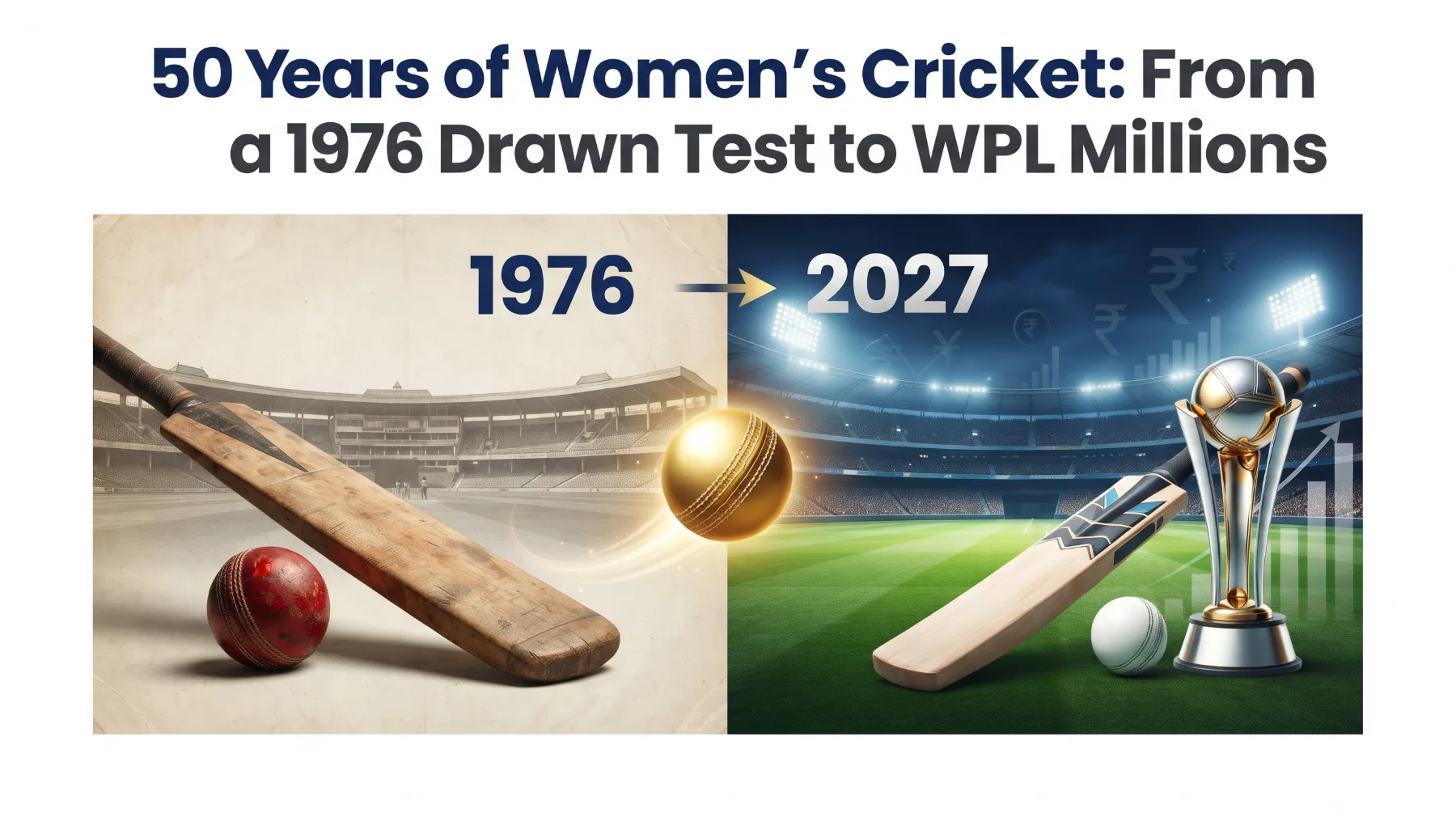
On 31 October 1976, Indian women's cricket entered a new era. At Bengaluru's M. Chinnaswamy Stadium, India played their first officially recognised Women's Test against the West Indies. The match ended in a draw, but it marked the beginning of a journey that would transform women's cricket in India. Fifty years later, the game has evolved into a professional sporting industry, with international recognition, improved financial support and major franchise competitions such as the Women's Premier League (WPL).
1976: The Pioneers Who Built the Foundation
Led by captain Shantha Rangaswamy, India's first official Test team competed in an era when women's cricket had limited financial backing and inadequate infrastructure.
Rangaswamy scored 74 in the first innings, while Shubhangi Kulkarni took five wickets. The six-Test series against the West Indies finished 1–1, with India recording their first-ever Test victory in the fourth match at Patna by five wickets.
The pioneers laid the foundation despite limited resources and recognition. Former players have recalled that they received little or no financial reward during their playing careers.
From Traditional Cricket to Modern T20
The tactical evolution of women's cricket is equally significant. Earlier generations focused heavily on technique, patience and building long innings. Modern T20 cricket demands a wider range of skills.
Power-hitting, innovative stroke-making, aggressive running between the wickets and athletic fielding have become essential. Bowlers increasingly use variations, changes of pace and targeted field placements to restrict scoring.
The growth of professional coaching, fitness programmes and international franchise competitions has also expanded the demands placed on players.
BCCI Support: A Structural Turning Point
A major institutional change came in 2006, when the Women's Cricket Association of India merged with the BCCI. This brought women's cricket under the country's main cricket administration.
In October 2022, the BCCI announced equal international match fees for men's and women's cricketers: ₹15 lakh per Test, ₹6 lakh per ODI and ₹3 lakh per T20I. This decision applied to match fees, not annual central contracts.
The launch of the WPL in 2023 created another important opportunity, providing players with professional franchise contracts and exposure to international competition.
WPL 2027: The Financial Transformation
The WPL 2027 mini-auction demonstrated the league's growing financial scale. A total of 25 players were sold for ₹6.25 crore.
Australian all-rounder Sophie Molineux became the most expensive signing at ₹1.10 crore, joining UP Warriorz. The franchise spent ₹2.60 crore on eight players, making it the biggest spender at the auction.
Conclusion
From the pioneers of 1976 to the professional opportunities of the WPL, Indian women's cricket has undergone a remarkable transformation. The foundation was built through determination; institutional backing strengthened the structure; and franchise cricket expanded financial opportunities. The next challenge is to ensure that this progress reaches every level of the women's game.