IND vs NZ 4th T20I: Why India's Young Bowling Attack Crumbled Under Pressure


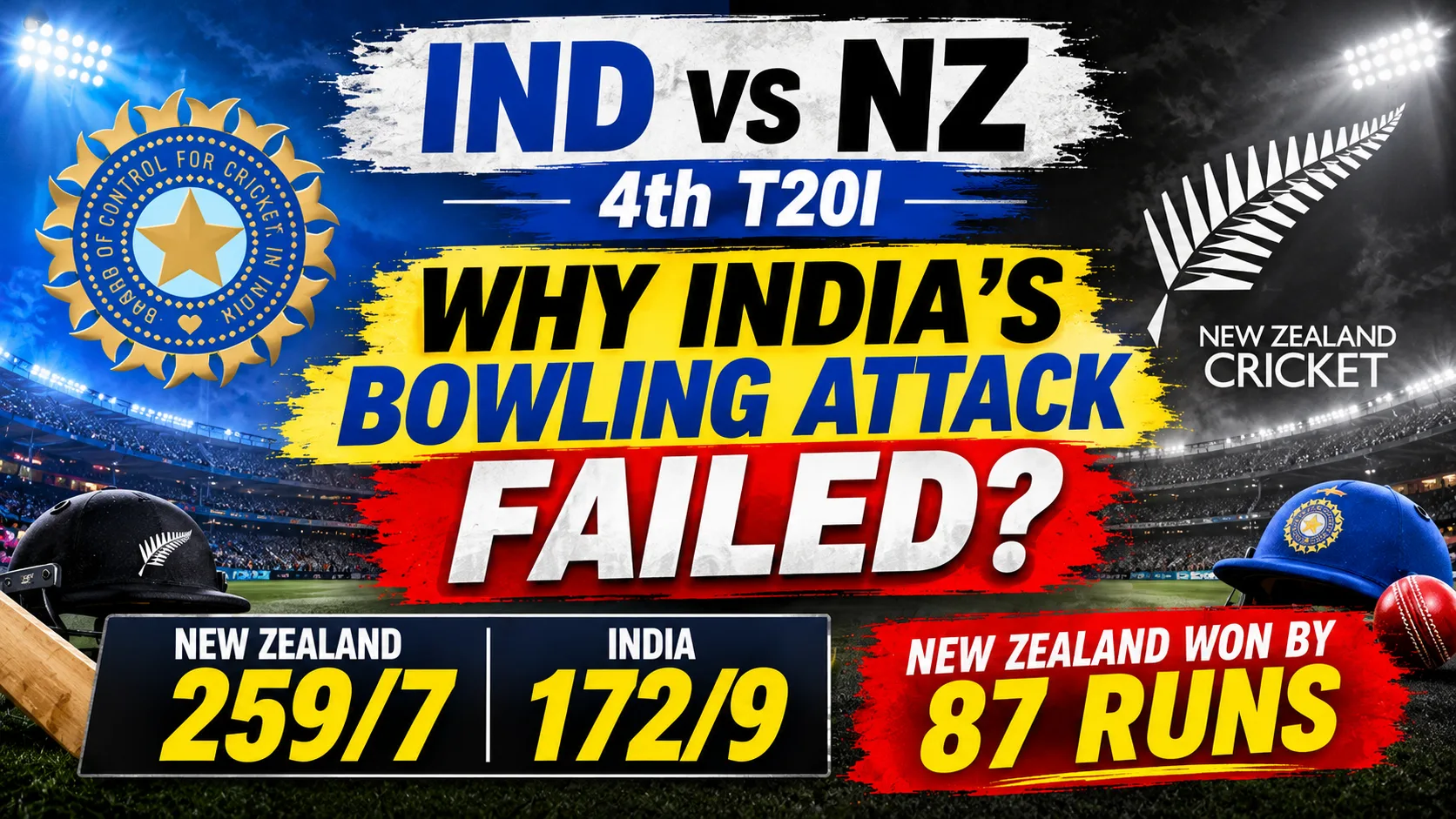
India's fourth T20I against New Zealand at Eden Park exposed the challenges of handling pressure in high-scoring T20 cricket. After winning the toss and choosing to bowl, India made an encouraging start by taking four wickets. However, Glenn Phillips and Michael Bracewell turned the game around with an explosive partnership, helping New Zealand post 259/7 in 20 overs.
India needed 260 runs to win but managed only 172/9, losing the match by 87 runs. While New Zealand's batting deserves credit, India's bowling execution and batting approach also came under scrutiny.
New Zealand's Middle-Order Assault Changed the Game
India had New Zealand at 112/4 after 10.4 overs. Mayank Yadav had already dismissed Tim Seifert, Daryl Mitchell and Bevon Jacobs, while Axar Patel removed Finn Allen.
India appeared to be in a position to restrict the hosts to a manageable total. But Glenn Phillips and Michael Bracewell had different plans.
Phillips scored 107 off 49 balls, including 10 sixes and six fours. Bracewell added 65 off just 25 deliveries, hitting six sixes and four boundaries.
Their 115-run partnership in 40 balls transformed the innings. New Zealand moved from 112/4 to 227/5 before Bracewell was dismissed in the 18th over.
The partnership demonstrated how quickly the momentum can change when two aggressive batters find their rhythm.
Mayank Yadav: Early Breakthroughs, Expensive Spell
Mayank Yadav finished with figures of 3/48 in four overs. He provided India with important breakthroughs by removing Seifert, Mitchell and Jacobs.
However, his spell also included an expensive 17th over, which cost 20 runs. Michael Bracewell attacked his deliveries, hitting three sixes during the over.
Mayank's performance reflected the difficult balance young fast bowlers must maintain in T20 cricket. Taking wickets is important, but controlling the scoring rate becomes equally critical when set batters are attacking.
His three wickets were valuable, but India needed greater control during the middle and death overs.
Nitish Kumar Reddy's 16th Over Became a Turning Point
Nitish Kumar Reddy had a difficult outing, conceding 64 runs in four overs while taking one wicket.
His 16th over was particularly expensive, producing 32 runs. After a no-ball and free hit, Phillips struck four consecutive sixes, putting enormous pressure on the Indian bowling attack.
The sequence showed how quickly an over can get away from a bowler when a batter is timing the ball well. Nitish eventually dismissed Phillips in the final over, but New Zealand had already crossed the 250-run mark.
For India, the challenge was not simply about bowling faster. It was about maintaining accuracy, varying the pace and executing a clear plan against an aggressive batter.
Why India's Death-Over Execution Failed
New Zealand's late acceleration was one of the biggest reasons behind the 259-run total.
India conceded 147 runs between the end of the 10th over and the completion of the innings. The Phillips–Bracewell partnership accounted for a major part of that scoring burst.
Yorkers are commonly used as a death-over option because they reduce the batter's opportunity to play certain attacking shots. However, their effectiveness depends on precise execution. A full toss or a delivery drifting into a batter's hitting zone can quickly become expensive.
The scorecard confirms the expensive overs, but it does not establish that failed yorkers alone caused the collapse. The broader issue was India's inability to consistently restrict the scoring once Phillips and Bracewell settled in.
India's 260-Run Chase Collapsed Early
Chasing 260 required India to maintain a scoring rate of 13 runs per over. That left little room for a slow start or repeated wickets.
The chase began disastrously. Jacob Duffy dismissed Sanju Samson and Ishan Kishan in the opening over, leaving India at 4/2.
Abhishek Sharma scored 27 off 15 balls, while Shreyas Iyer contributed 22 off 11. However, both departed before India could establish a strong partnership.
India reached 61/4 at the end of the powerplay. Nitish Kumar Reddy added 21 off 10 balls, while Naman Dhir scored 28 off 13. Tilak Varma remained the top scorer with 35 off 35 deliveries.
The problem was not a lack of attacking intent. India needed to combine aggression with partnerships, particularly after losing two wickets in the opening over.
Jacob Duffy was outstanding with the ball, taking four wickets for 23 runs. His early breakthroughs made India's difficult chase even harder.
What India Can Learn From the Defeat
The match highlighted several areas that India's young bowling and batting units can work on:
Death-over execution: Bowlers need to maintain accuracy and avoid predictable deliveries against set batters.
Pressure management: Young fast bowlers need to respond calmly when an over becomes expensive.
Bowling plans: Teams must adapt their lengths, pace and field placements according to the batter's strengths.
Chase management: Aggression must be supported by partnerships, especially after early wickets.
Handling big totals: A 250-plus target requires a clear batting strategy rather than relying only on individual attacking performances.
Conclusion
India's 87-run defeat was a combination of New Zealand's exceptional batting, expensive bowling spells and an early collapse during the chase. Mayank Yadav showed his wicket-taking ability, but Nitish Kumar Reddy's expensive over and the inability to contain Phillips and Bracewell proved costly. For India's young players, the match highlighted the importance of execution, adaptability and composure under pressure.
Frequently asked questions
Why did India concede 259 runs against New Zealand?
India struggled to contain Glenn Phillips and Michael Bracewell, who added 115 runs off just 40 balls.
How did Mayank Yadav and Nitish Kumar Reddy perform?
Mayank Yadav took 3 wickets for 48 runs, while Nitish Kumar Reddy took 1 wicket but conceded 64 runs in four overs.
What was the result of the India vs New Zealand fourth T20I?
New Zealand defeated India by 87 runs after scoring 259/7 and restricting India to 172.