IPL Match Pressure Management: How Players Handle High-Stakes Moments


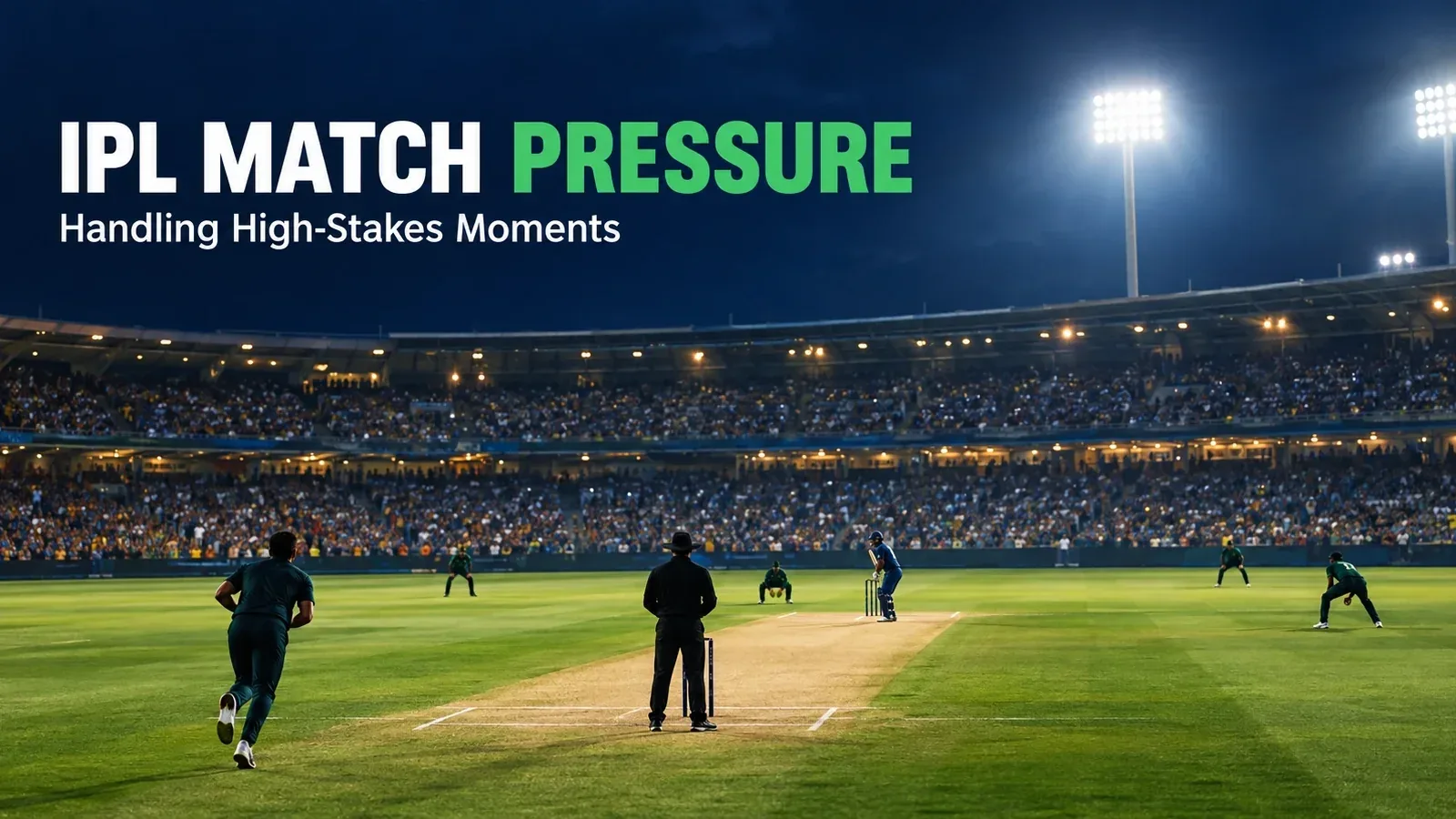
A close finish can change the atmosphere of an IPL match in a matter of minutes. A batter may need 12 runs from the final over, a bowler may have to defend a small total, or a captain may face a difficult decision with only a few overs remaining. At that stage, technical ability still matters, but the way players respond to pressure can make a significant difference.
Pressure is part of every competitive sport, and the IPL brings several sources of it together: large crowds, television coverage, team expectations and the importance of every league point. Players cannot remove these situations from the game. They need to understand them, prepare for them and make decisions without losing focus on the task in front of them.
Why pressure plays such a big role in IPL matches
In a long tournament, not every match carries the same immediate importance. A team fighting for a playoff place may approach a game differently from one that has already secured qualification. Individual players also face different situations depending on their role and position in the batting or bowling order.
Pressure often increases when the margin for error becomes smaller. A missed run, an expensive over or a poorly judged shot can quickly change the balance of a close contest.
Expectations from players and teams
IPL players perform in front of large audiences and under constant public attention. A high-profile batter may be expected to score quickly, while a leading bowler may be judged on how effectively they control the final overs.
These expectations can influence decision-making. A batter might try to force a boundary when rotating the strike would be more useful. A bowler may abandon a well-planned approach after conceding a few runs.
The challenge is to separate outside expectations from the immediate requirement of the match.
The pressure of a close finish
The final overs often bring a series of decisions in a short period. Batters must judge which deliveries to attack, bowlers must select their plans, and captains must decide how to use their available options.
A close finish does not always require an extraordinary action. Sometimes the better decision is to take a single, protect a boundary or bowl a delivery that makes scoring difficult.
How batters respond when the pressure rises
Batting under pressure is not simply about hitting bigger shots. It is about reading the situation correctly and choosing an approach that gives the team the best chance of reaching its target.
A batter chasing a large total may need to take calculated risks. In a low-scoring chase, preserving wickets and building partnerships can be more valuable than attacking every over.
Breaking the target into smaller goals
Instead of thinking only about the final target, batters can focus on smaller tasks. These may include getting through the powerplay, maintaining the required run rate or building a partnership before increasing the scoring rate.
This approach helps keep attention on actions that can be controlled.
For example, if a team needs 48 runs from the final six overs, the batters must consider the wickets available, the bowlers remaining and the conditions at the crease. The required rate is important, but it should not be the only factor behind every shot.
Choosing the right moment to attack
A batter does not need to take the same level of risk throughout an innings. The field setting, bowler's strengths, pitch conditions and match situation all influence shot selection.
Good decision-making often involves recognising when not to attack. A quiet over does not automatically mean the chase is slipping away, particularly when wickets remain in hand.
The ability to change gears is also visible in discussions of Virat Kohli ODI Centuries: Different innings can demand different scoring approaches, and adapting to the situation is an important part of batting.
Why bowlers need a clear plan under pressure
Bowlers often have very little time to recover from a difficult delivery. In a close match, one boundary can change the required equation and increase the pressure on the next ball.
The most effective response is not necessarily to attempt something unusual. Bowlers need a clear plan based on the batter, field placement and match conditions.
Executing the plan instead of reacting emotionally
A bowler who has conceded a boundary may feel the need to compensate immediately. That reaction can lead to a delivery that does not match the original plan.
Instead, bowlers can focus on the next delivery and the specific outcome they want. This might mean limiting the batter's scoring options or making them play towards a less favourable area of the field.
Consistency is particularly important in the final overs, where even small changes in execution can affect the result.
Adapting to the batter
A plan that works against one batter may not work against another. Some players prefer pace, while others are more comfortable against slower deliveries. The bowler must consider these differences without becoming predictable.
Captains and wicketkeepers also contribute by discussing field placements and possible changes between deliveries.
The captain's role in managing match pressure
Captains experience pressure from several directions at once. They must consider the score, available bowlers, field restrictions, opposition strengths and the condition of their own players.
A captain's decision can influence the next few overs, but it is rarely made in isolation. Communication with bowlers, wicketkeepers and other senior players is an important part of the process.
Making decisions with limited time
During a match, captains cannot examine every possible outcome. They need to identify the most relevant information and make a practical decision.
For example, choosing a bowler for the final over may depend on the bowler's current rhythm, the batter at the crease and the conditions. A reputation alone should not determine the choice.
The same principle applies to the toss. The decision to bat or bowl first must reflect the conditions and the team's assessment of the match. where match situations and changing requirements are central to understanding the result.
Keeping communication clear
A tense match is not the best time for lengthy discussions. Players need clear instructions and a shared understanding of the plan.
A captain who communicates calmly can help the team avoid confusion. This does not guarantee success, but it makes it easier for players to focus on their responsibilities.
How teams prepare players for high-pressure situations
Pressure management is not something teams can develop only during an actual match. Preparation begins in training, where players can practise different situations and learn how to respond.
Training can include specific match scenarios, such as defending a small total, chasing a target with few wickets remaining or bowling an over when the opposition needs a quick finish.
Practising realistic match situations
Scenario-based practice gives players an opportunity to make decisions under conditions that resemble a real contest. The aim is not simply to create tension, but to help players understand their roles when time and options are limited.
A 2026 position statement on sporting performance under pressure, published in Sports Medicine, discusses the value of appropriate pressure training, pre-performance routines and psychological skills. It also stresses that pressure-based training should be introduced carefully and with suitable support. Teams can refer to the research, Performance Under Pressure in Sport: A Position Statement, for a broader understanding of the subject.
Developing routines and mental focus
Players may use simple routines before facing a delivery or beginning an over. These routines can help them settle their attention on the task.
The routine does not need to be complicated. A batter may take a moment to reset before facing the next ball, while a bowler may review the intended line and length before starting the run-up.
The purpose is to avoid carrying frustration from the previous delivery into the next one.
Pressure management can influence the result
High-pressure situations do not always produce dramatic performances. Sometimes a match is decided by a sensible single, a well-directed delivery or a captain making a timely bowling change.
The team that handles pressure well is not necessarily the one that takes the biggest risks. It is often the one that understands the situation and makes fewer avoidable mistakes.
For another example of how individual moments can shape a contest, readers can explore ZIM-A vs IRE-A 2nd Unofficial ODI: Zimbabwe A Win by 1 Wicket as Maposa Shines Looking closely at important phases of a match can reveal how decisions and execution influence its direction.
Conclusion
Pressure is an unavoidable part of IPL cricket, especially when matches reach their decisive moments. A player's ability to stay focused, read the situation and make sensible decisions can be just as important as technical skill. Batters need to judge when to attack, bowlers must trust their plans, and captains have to make clear decisions under pressure.
No team can control every moment of a match, but it can prepare its players to respond better. Regular practice, clear communication and mental preparation help players handle difficult situations. In a tournament as competitive as the IPL, the ability to remain composed when the stakes are high can make a real difference.
📚 Related Reading
👉 Top 10 Batters with the Most Runs in IPL History
👉Most Runs in Women's ODI Cricket History: Top 10 Players
👉 IPL Squad Depth: Why Strong Benches Matter During a Long Season
Frequently asked questions
What does pressure management mean in IPL cricket?
Pressure management means staying focused, making sensible decisions and executing the match plan during difficult situations, such as close run chases or the final overs.
How do IPL players prepare for high-pressure moments?
Players practise match scenarios, develop routines and work on decision-making. Teams may also use support from coaches and qualified sport psychology professionals.
Why is a captain's role important in pressure situations?
Captains help organise field placements, choose bowlers and communicate plans. Clear decisions can help players understand their responsibilities during tense phases of a match.