IPL DRS Strategy: How Teams Make Review Decisions


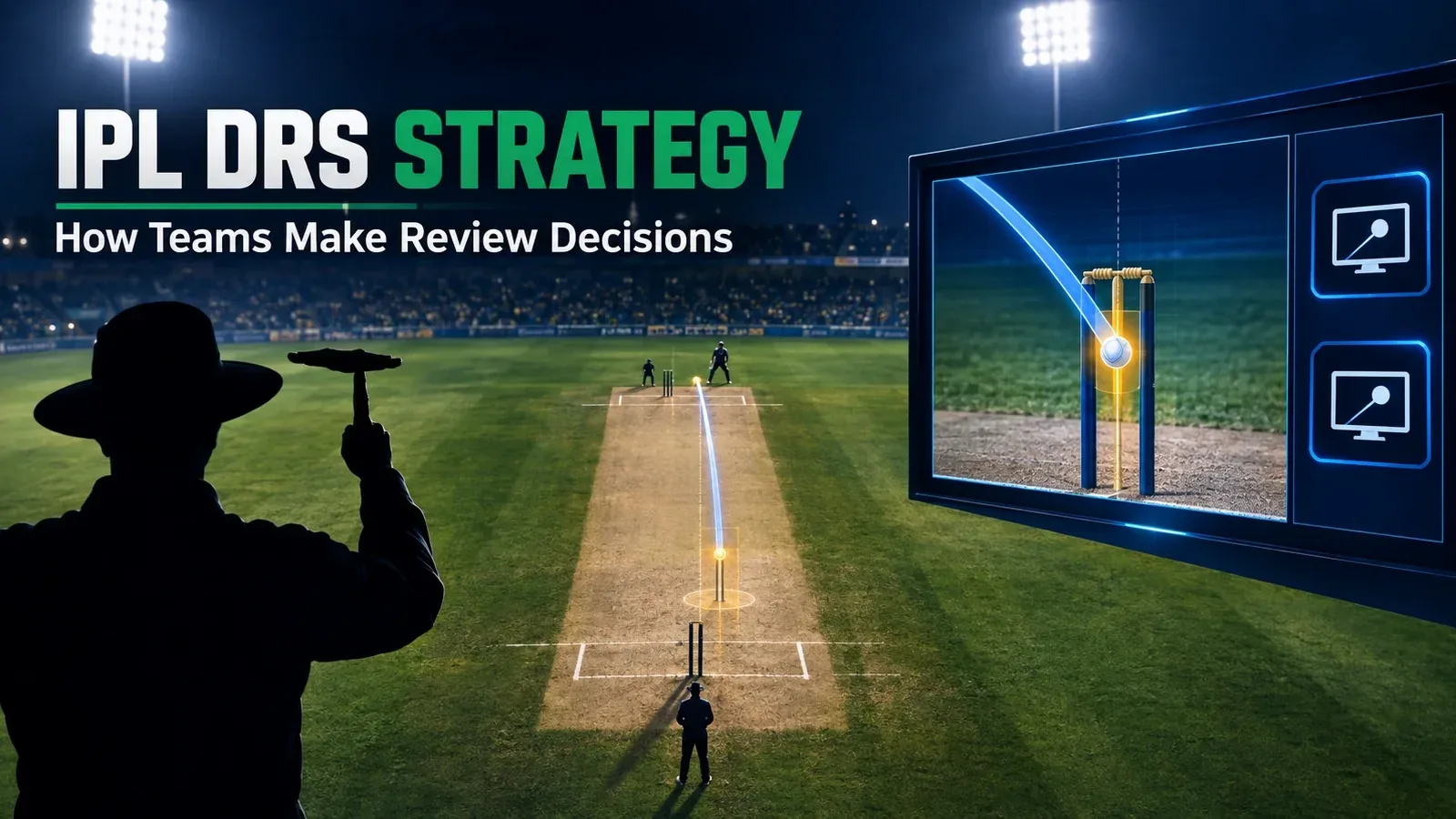
In the IPL, a successful DRS decision can change the direction of a match. Teams must decide when to challenge an umpire’s call, which player to consult and whether the available evidence justifies using a review.
Since unsuccessful reviews are limited, every decision involves risk, communication and match awareness. DRS strategy is therefore not simply about questioning an umpire; it is about making informed decisions under pressure.
Understanding the Value of a DRS Review
The Decision Review System gives teams an opportunity to challenge certain on-field decisions with the help of technology. In a fast-paced tournament like the IPL, a review can influence wickets, partnerships and the direction of a chase. However, technology supports decision-making; it does not guarantee that every close call will be overturned.
Why Every Review Matters
Each team gets a limited allowance of unsuccessful player reviews in an innings. Under the 2026 IPL playing conditions, a team can have up to two unsuccessful reviews. A successful review does not reduce this allowance, while an LBW decision that remains unchanged because of Umpire’s Call also does not count as unsuccessful.
This makes review selection an important tactical decision. A captain cannot challenge every doubtful decision simply because players are convinced that the umpire may have made a mistake.
Communication Between the Captain and Players
A successful review often begins with clear communication. The batter, bowler, wicketkeeper and captain may have different views of the same delivery. Their observations need to be combined before the team makes its final decision.
The Wicketkeeper's Role
The wicketkeeper usually has a close view of the ball's movement and can provide useful information about a possible edge. In a caught-behind appeal, the keeper may communicate whether they heard or felt contact.
However, a sound or instinct alone should not automatically lead to a review. The captain must consider the bowler's reaction, the batter's movement and the available evidence.
The Bowler's Input
The bowler may have a strong view of an LBW appeal because they observe the delivery's line, length and the batter's position. Yet, the captain should also consider the impact point and whether the ball appeared to be going on to hit the stumps.
Reading the Match Situation Before Reviewing
DRS decisions should not be made in isolation. The match situation can influence how much risk a team is willing to accept. Captains must consider the innings phase, remaining reviews and importance of the batter before challenging an umpire's decision.
Importance of the Innings Phase
During the powerplay, an early wicket can create pressure on the batting side. A fielding captain may therefore consider a review carefully when a strong LBW or caught-behind appeal is turned down.
In the middle overs, teams may become more selective. They need to preserve reviews for later situations when an important batter is at the crease or a breakthrough could change the scoring pattern.
At the death, a review may become especially important if a key batter is involved. However, the decision must still be based on evidence rather than the importance of the moment alone.
Scoreboard and Remaining Resources
The number of reviews remaining should always be part of the captain's calculation. A team with one review left must be more cautious than a team that still has both available.
Understanding Technology and Umpire's Call
DRS uses different forms of technology to help the third umpire examine specific aspects of a decision. Depending on the nature of the appeal, the review process may involve ball-tracking, sound-based edge detection and video replays.
Ball-Tracking and LBW Decisions
For an LBW review, ball-tracking helps assess where the ball pitched, where it made contact with the batter and whether its projected path would hit the stumps.
The technology provides valuable information, but marginal decisions can still remain with the original on-field call under Umpire's Call. Teams must understand this possibility before challenging a decision.
Edge Detection and Caught-Behind Appeals
Sound-based technology can help identify whether the ball made contact with the bat. The third umpire considers the available evidence alongside the relevant replays.
A captain should avoid treating every noise as proof of an edge. Bat-pad contact, movement of equipment and other sounds can create uncertainty, making a careful assessment essential.
Common Mistakes in DRS Decision-Making
Even experienced teams can make poor review decisions when pressure affects their judgement. A disciplined review process helps reduce these mistakes and prevents teams from wasting their limited review allowance.
Reacting Emotionally
A loud appeal or a bowler's confident reaction can influence the captain. However, excitement is not the same as evidence. Teams should allow a brief discussion before making the signal.
Reviewing Without Enough Information
Some teams may challenge a decision based mainly on instinct. This can waste an important review, particularly when the delivery is difficult to assess from the players' positions.
Ignoring the Wider Match Context
A captain who focuses only on the last delivery may overlook the value of preserving a review for a more important moment. Review management should remain part of the team's overall strategy.
How Teams Can Build a Better DRS Strategy
An effective DRS approach begins before the match. Teams can prepare players by discussing common review situations, communication responsibilities and the importance of understanding the available technology.
Establishing Clear Responsibilities
The captain should know whose observations are most useful for different types of appeals. For example, the wicketkeeper may provide important information about a possible edge, while the bowler may offer a useful perspective on an LBW appeal.
The final decision should remain coordinated rather than becoming a disagreement between players.
Reviewing Decisions After Matches
Teams can examine their review choices during post-match analysis. They can identify whether a review was supported by evidence, whether communication was effective and whether the timing was appropriate.
Conclusion
DRS strategy in the IPL is a combination of technology, communication and match awareness. Teams must assess the quality of an appeal, understand the review allowance and consider the situation before challenging an umpire's decision.
The best captains do not use reviews simply because a moment looks doubtful. They use them when the available evidence justifies the risk. A disciplined approach can protect valuable reviews and improve decision-making under pressure.
Frequently asked questions
What Does DRS Stand for in Cricket?
DRS stands for Decision Review System. It allows teams to challenge eligible on-field decisions with the help of technology and the third umpire.
How Many Unsuccessful Reviews Does Each IPL Team Get?
Under the 2026 IPL playing conditions, each team is allowed a maximum of two unsuccessful player reviews per innings.
Does Umpire's Call Count as an Unsuccessful Review?
No. When an LBW review remains unchanged solely because of Umpire's Call, it does not count towards the team's unsuccessful review allowance.
Who Makes the Final Decision to Take a Review?
The batter involved can request a review after being given out, while the fielding captain can request a review when the batter is given not out. The team must communicate its decision within the permitted time.